Our Pearls
We grade for luster first and size last.
Which is the opposite of how pearls are usually priced. A large pearl with shallow nacre is a short-lived object. A smaller one that returns light cleanly will still be worth wearing in forty years.
Where they come from
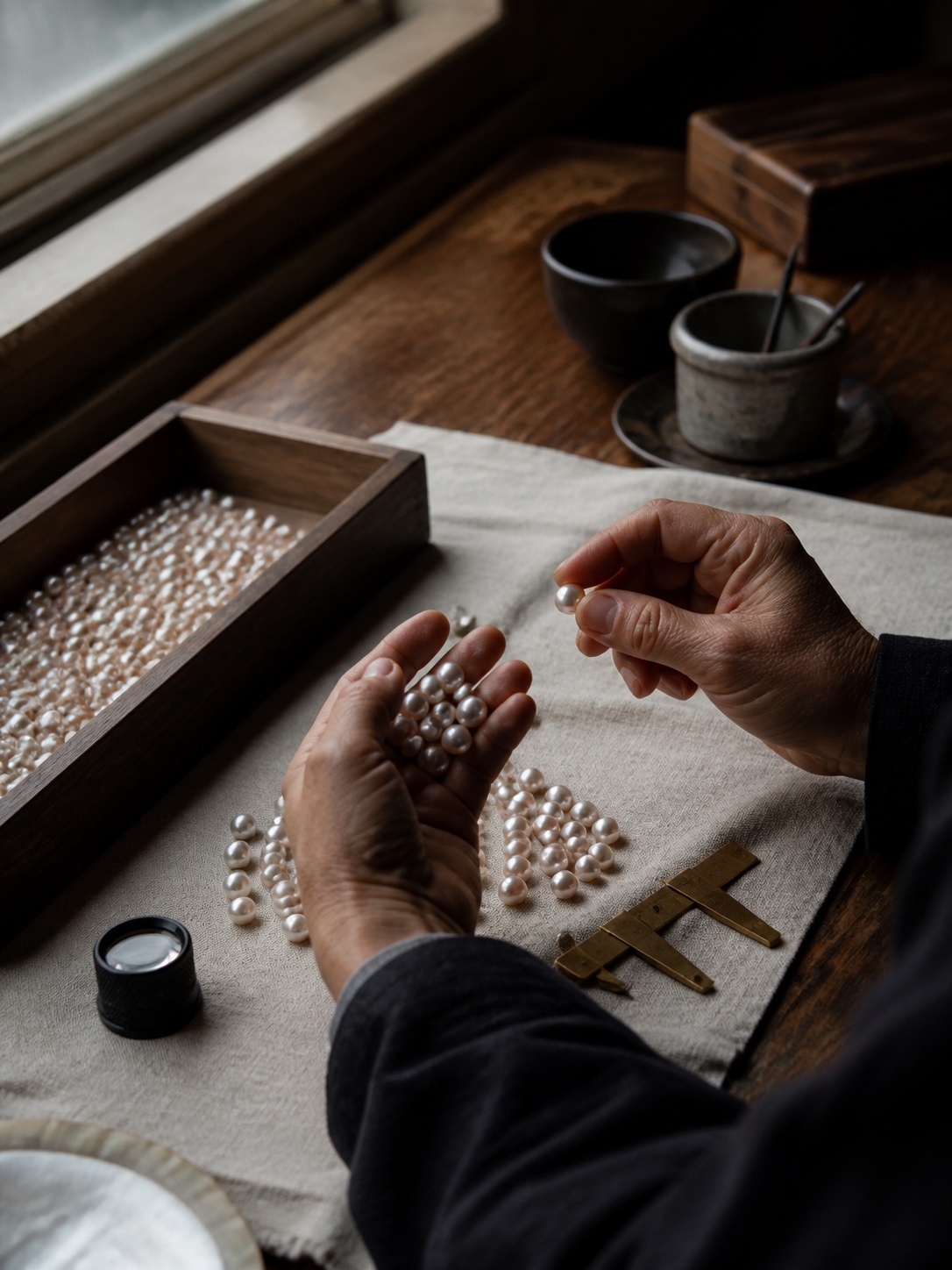
We buy from four farms, and we have bought from the same four for long enough that we are shown the harvest before it is sorted. That access is the whole business — everything downstream is patience.
A harvest arrives loose. It is washed, then laid out under north light and turned. Pearls are set aside three times over as many days, because the eye adjusts and a pearl that looked exceptional on Monday often does not on Wednesday.
What survives that is matched into pieces. Matching is the slow part: for a strand it means agreeing on luster, overtone and drill-hole placement across fifty-four pearls, and for a pair of earrings it can mean pulling two from a tray of ninety.
How pearls are graded
Four criteria, in the order we apply them. Every product page on this site publishes all four, so you can compare pieces on the same terms rather than on price alone.
Luster
How sharply the pearl returns light. On a fine pearl you can make out the edge of a window in its surface. We grade this first, because nothing else recovers a dull pearl.
Surface
Nacre is grown, so it carries marks. We accept characteristics that are invisible at arm's length and reject anything that catches a fingernail.
Nacre
The depth of material over the nucleus. Thin nacre looks acceptable for a season and then goes chalky. Ours is measured, not estimated.
Shape
Round is the rarest and not always the right answer. A baroque pearl chosen for its silhouette will outlast a mediocre round one in how often it is worn.
The four types
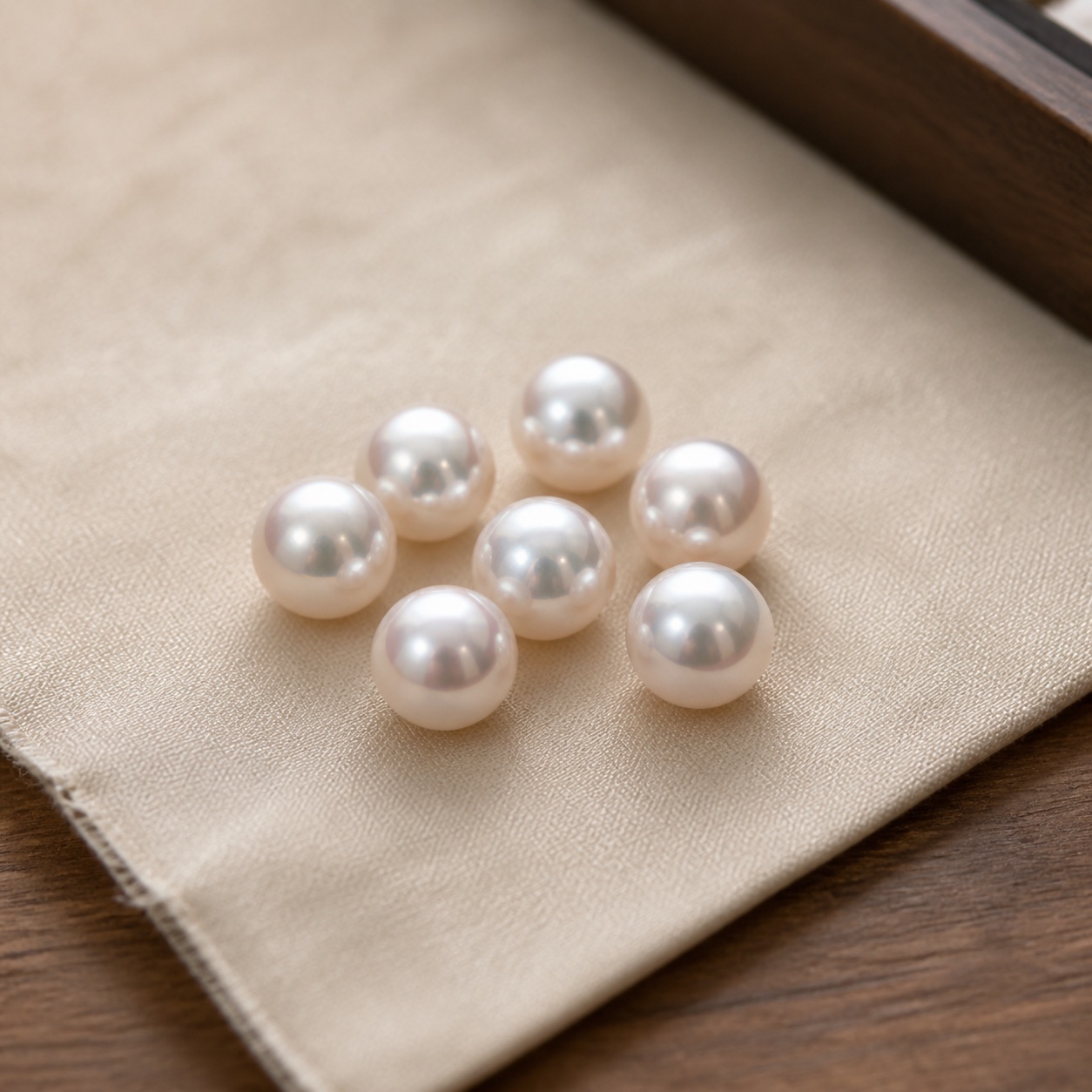
Akoya
Japan
The classic white pearl, and the sharpest luster of any cultured type. Small — rarely above 9 mm — and unforgiving of poor nacre, which is why grade matters most here.
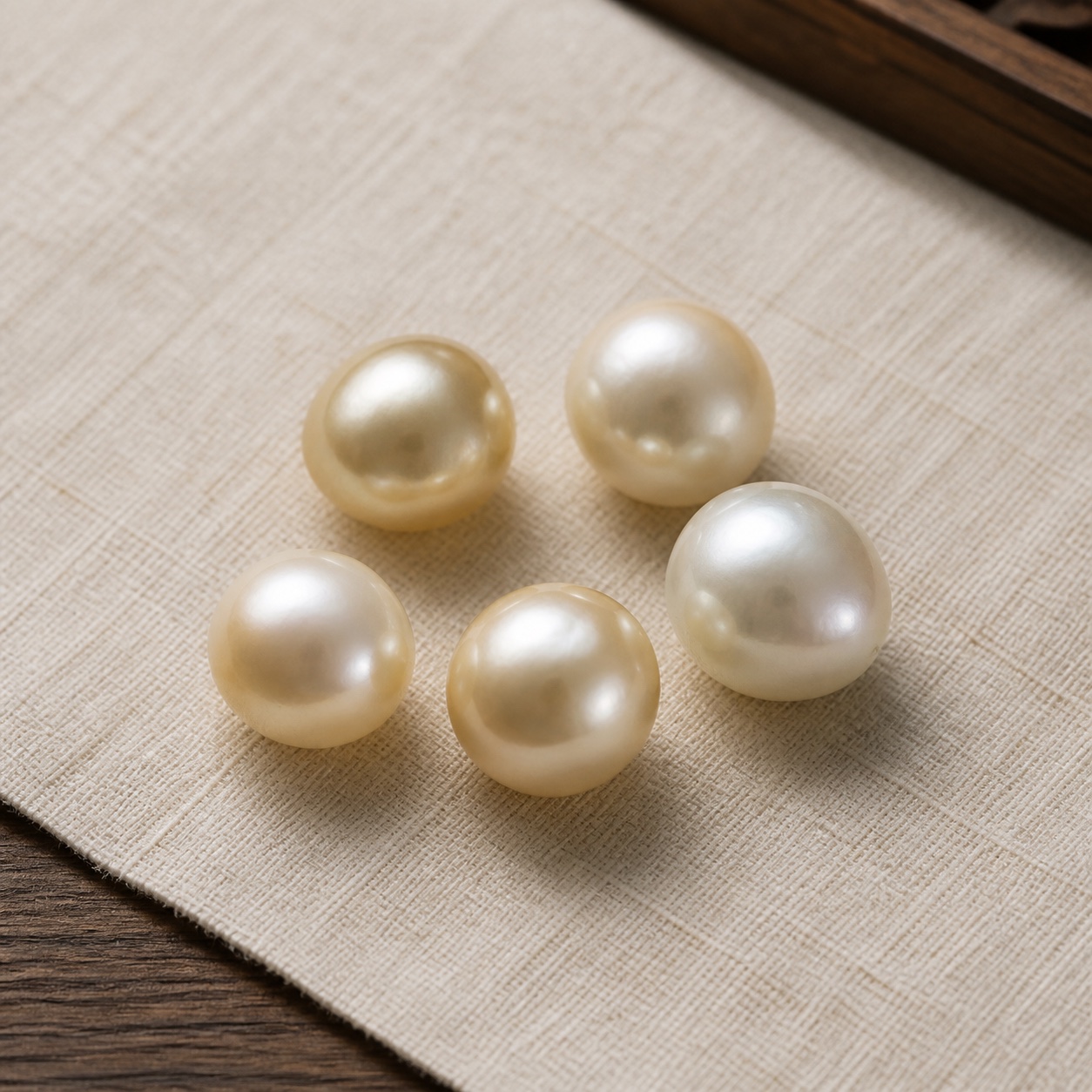
South Sea
Australia
The largest cultured pearls, grown slowly in the world's biggest oyster. Their luster is satin rather than mirror, and their nacre is thick enough to last generations.
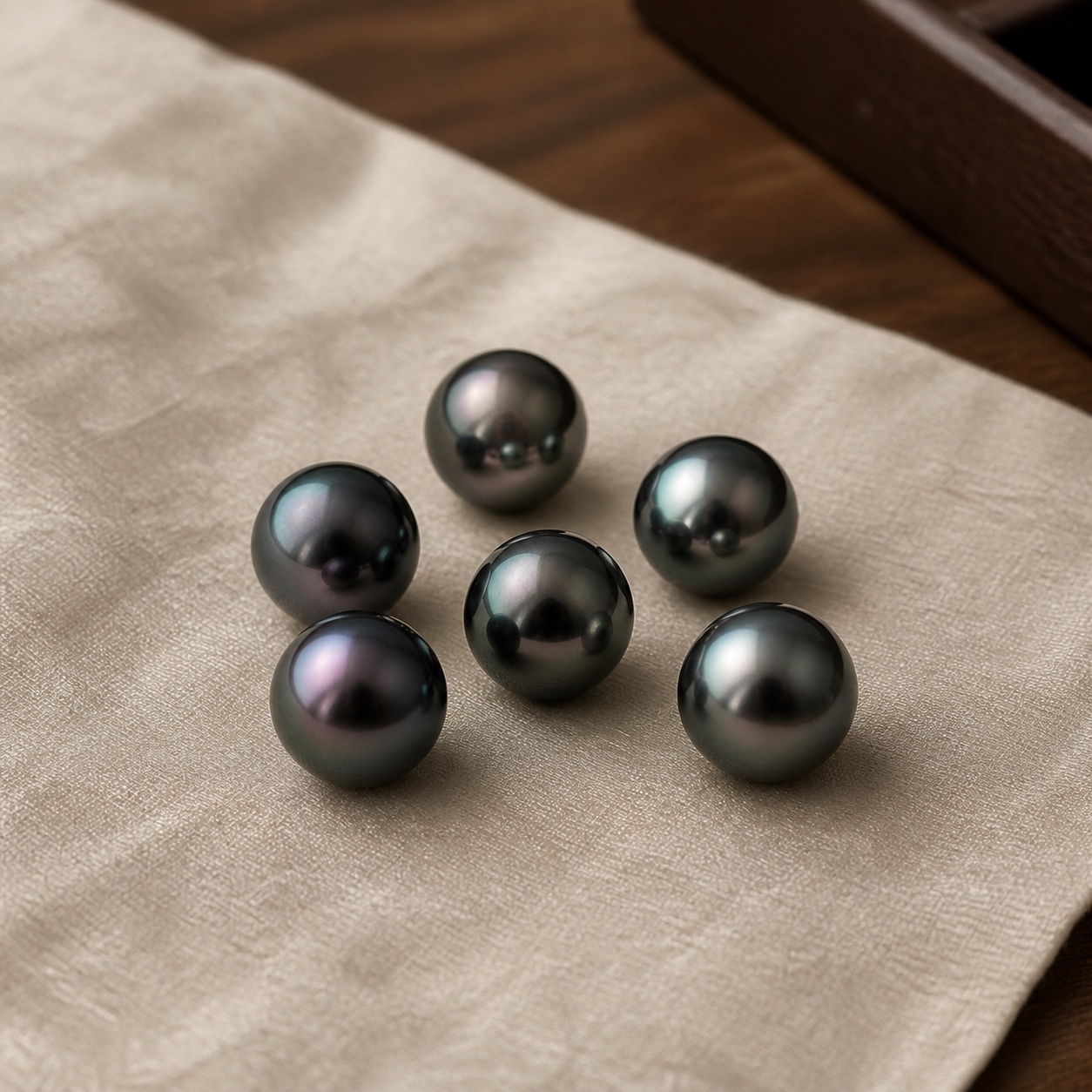
Tahitian
French Polynesia
Naturally dark, and never one colour. Body tone runs from grey to near-black, with overtones of green, aubergine and peacock that only show as the pearl turns.
Freshwater
China
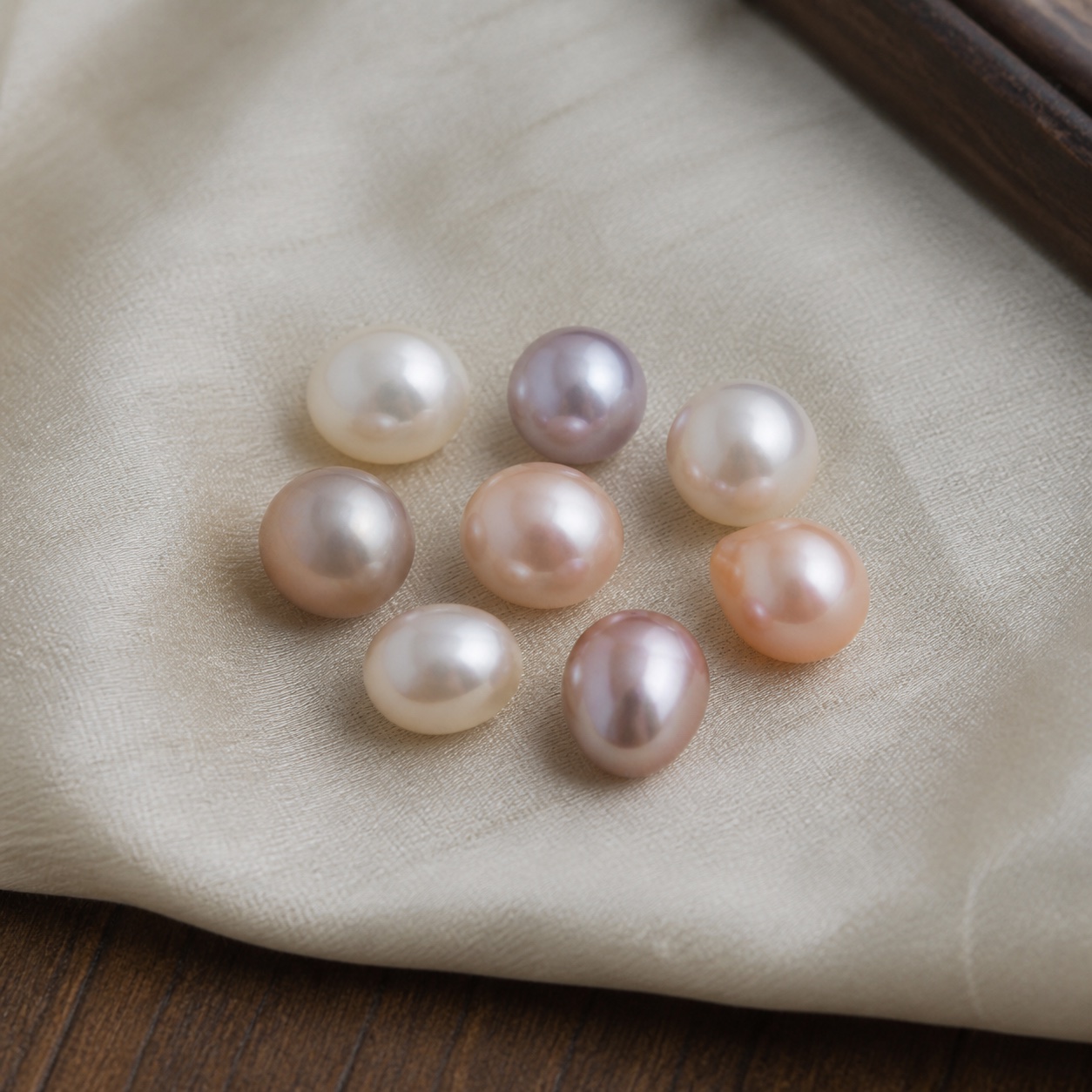
Solid nacre throughout rather than grown over a bead nucleus, which makes them durable. Warm, even luster, and the type we reach for when a piece will be worn daily.
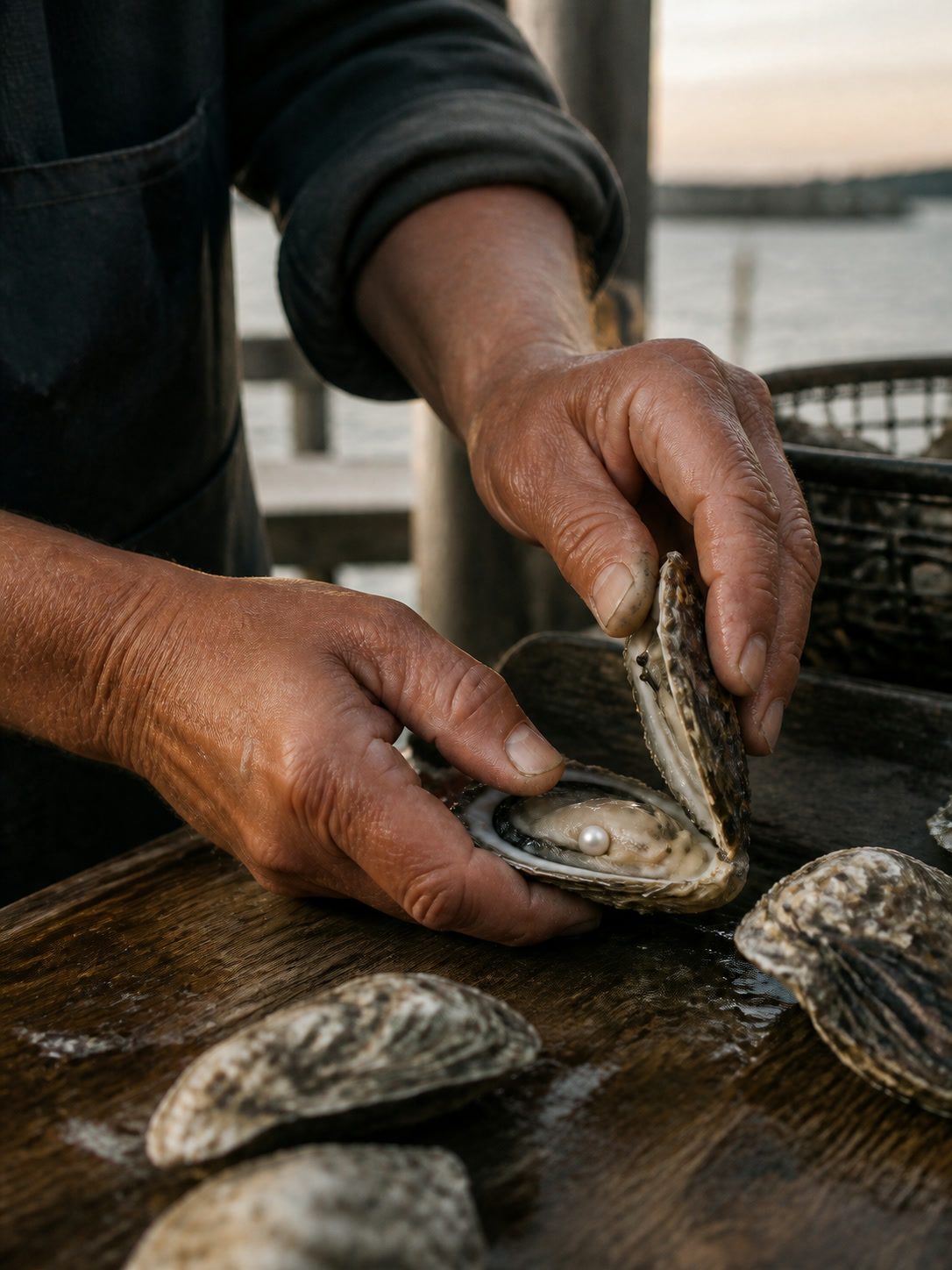
Illustrative image of pearl cultivation.
How a pearl is grown
A cultured pearl begins when a technician opens a living oyster and places a small bead and a scrap of mantle tissue inside. The oyster then does what it would do with any irritant — it coats it, layer by layer, in nacre. Nothing about that is fast. Two to four years pass before the shell is opened again.
Most of what comes out is unremarkable. A harvest yields thousands, and a small fraction have the roundness, the surface and the depth of nacre worth setting. That is the arithmetic behind every strand on this site: the matching is the work, and it is why a graduated strand takes longer to assemble than the pieces it is made from.
Care
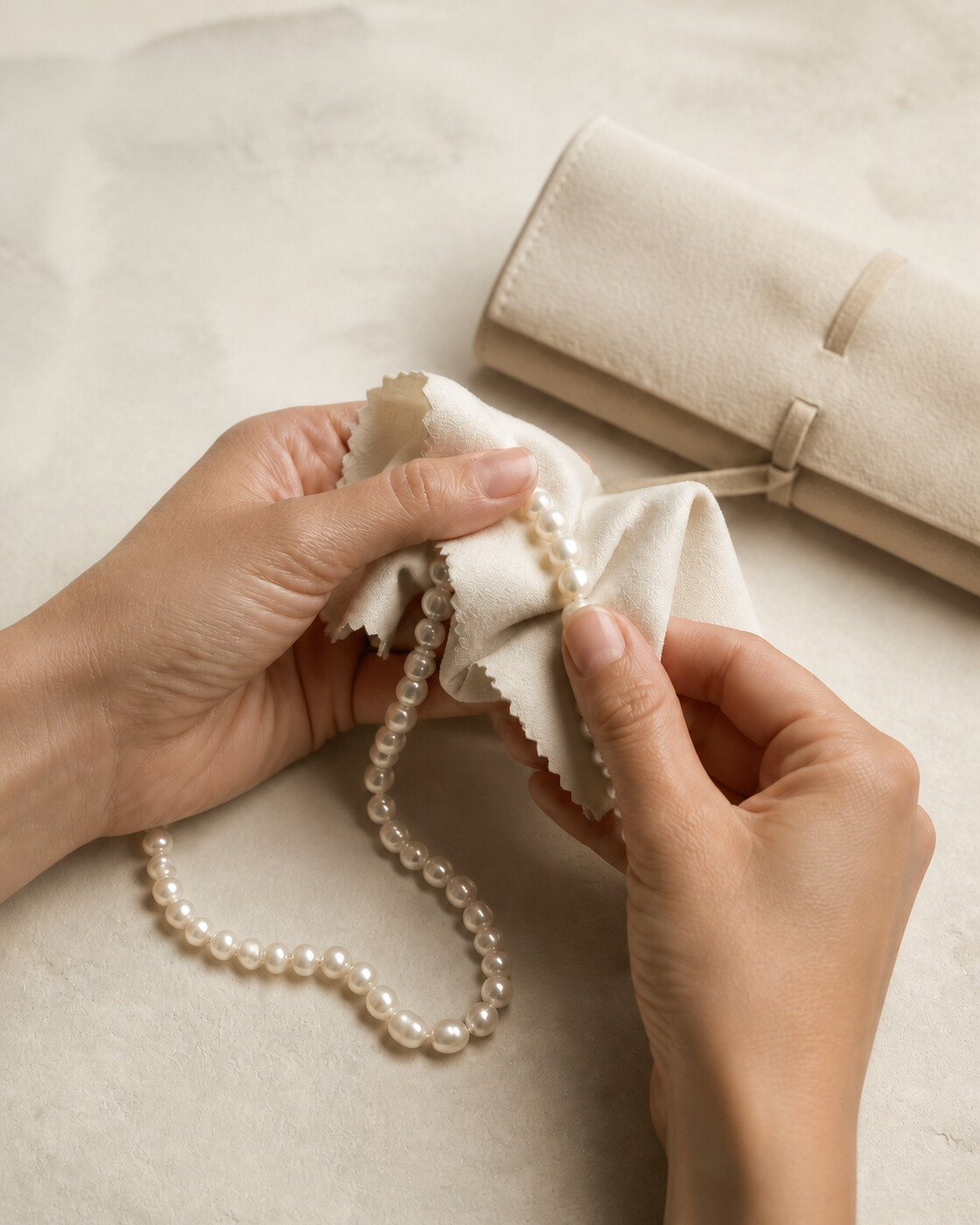
Nacre is laid down by an animal, not cut from stone. It is softer than almost anything else in a jewellery box, and it reacts to acid — which is to say, to perfume, hairspray, and skin at the end of a long day.
- Put pearls on last, after fragrance, hairspray and cosmetics have dried. Nacre is porous and alcohol dulls it.
- Wipe with a soft damp cloth after wearing. Never use solvents, jewellery dips or ultrasonic cleaners — all three strip nacre.
- Store flat in the pouch provided, away from harder stones and metal that will scratch the surface.
- Restring knotted strands roughly every eighteen months of regular wear. Silk stretches, and a stretched thread is how strands are lost.
- Wear them. Pearls do better against skin than in a drawer.